Think Your Passwords Are Secure? Hackers Disagree—Here’s Why
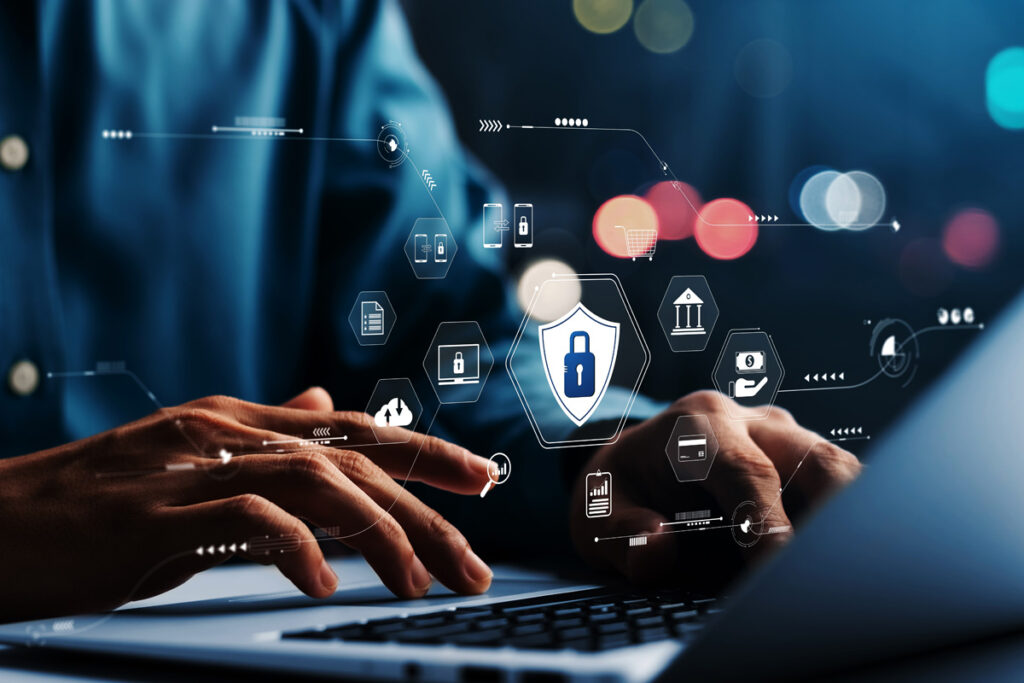
cybersecurity concept Global network security technology, business people protect personal information. Encryption with a padlock icon on the virtual interface.
In the digital age, where our lives are intricately woven into the fabric of the internet, passwords have become the gatekeepers of our personal and professional realms. Yet, as we rest comfortably under the illusion of security, hackers lurk in the shadows, ready to unravel the weakest links in our defenses. Are your passwords really as secure as you believe? Let’s dive into the captivating world of cyber security and uncover the hidden secrets behind password vulnerability.
Your Passwords Aren’t as Safe as You Think!
Imagine locking your front door with the flimsiest of keys, convinced that it’s impenetrable. This is the reality for many who rely on passwords like “123456” or “password” to safeguard their digital domains. These common passwords, often chosen for their simplicity, are like an open invitation for hackers. They employ sophisticated algorithms and brute force attacks to crack such predictable codes with effortless ease, proving that the most obvious choices are often the least secure.
But even those who consider themselves savvy by opting for longer passwords aren’t entirely out of the woods. Hackers deploy cunning tactics such as dictionary attacks, where they use extensive lists of precompiled words and phrases to guess passwords. If your password consists of only common words or predictable sequences, it won’t take long for these attacks to succeed. Additionally, the reuse of passwords across multiple platforms can exponentially increase the risk, as breaching one account can unlock numerous others.
If you believe that adding a sprinkle of complexity with symbols and numbers makes your password unbreakable, think again. Hackers have adapted to this strategy with the help of rainbow tables and precomputed hash databases, which allow them to reverse-engineer even the most complex password hashes. It’s a cat-and-mouse game where innovation and creativity are pivotal. Without staying one step ahead, the seemingly secure fortress of your passwords could crumble at any moment.
Discover the Secret to Outsmarting Hackers
So, how do you construct a password that stands strong against the relentless onslaught of cybercriminals? It all begins with thinking like a hacker. The secret lies in unpredictability. Create a passphrase instead of a password, a long and nonsensical string of random words that bear no relation to each other. By increasing the length and randomness, you make it exponentially more difficult for hackers to crack the code, as each additional character exponentially increases the number of possible combinations.
Implementing a password manager can also be a game-changer. These nifty tools generate and store complex, unique passwords for each of your accounts. This not only saves you the hassle of remembering multiple passwords but ensures that each account is fortified with its own robust layer of security. With a password manager, you can indulge in the blissful ignorance of not having to memorize anything beyond a single, master password.
Finally, embrace the power of two-factor authentication (2FA) whenever possible. By requiring a second form of verification—be it a fingerprint, a facial scan, or a time-sensitive code sent to your device—2FA adds an additional layer of security. Even if a hacker manages to crack your password, they would still need to bypass this formidable barrier. It’s akin to having a double lock on your door, giving you that extra peace of mind.
In a world where digital threats are ever-evolving, keeping your passwords secure requires more than just basic vigilance. By understanding the tactics employed by hackers and implementing robust security measures, you can transform your passwords from brittle barriers into unyielding fortresses. Embrace unpredictability, leverage technology, and stay one step ahead. After all, your digital sanctuary deserves nothing less than the best protection, allowing you to navigate the online world with a smile of confidence.